
5 Mistakes Philadelphia Sellers Make After Their Listing Expires — And How to Avoid Them

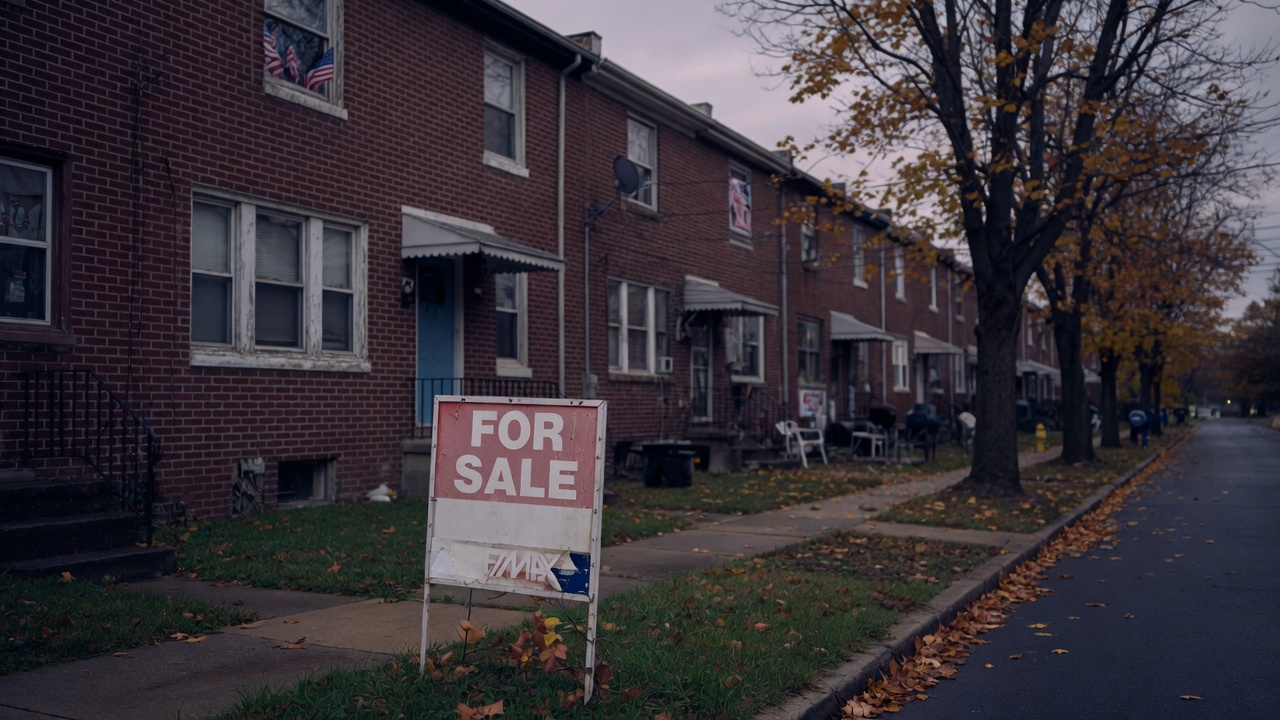
When a Philadelphia home listing expires, the instinct is to react fast — but reactive decisions almost always cost sellers money. National Association of Realtors data shows roughly 11% of listing agreements end without a sale, and the sellers who recover best are the ones who avoid the five most predictable post-expiration mistakes outlined below.
I've spent decades working with homeowners across Philadelphia and South Jersey whose listings didn't sell. And while every situation is different — the property, the price, the neighborhood, the reason it stalled — I see the same handful of mistakes repeated over and over again. They're understandable. They're human. And they're expensive.
Here are the five mistakes I see sellers make most often after their listing expires, and what to do instead.
Mistake #1: Waiting Weeks (or Months) to Take Action
This is the most common mistake, and it's the one that does the most damage. When a listing expires, there's a natural impulse to step back, cool off, and figure things out later. I get it. Selling a home is personal. An expired listing feels like rejection. But the market doesn't care about your timeline.
Every week your home sits off the MLS, it loses ground to new inventory. In the Philadelphia metro area, where average days on market ranges from 49 to 69 days depending on the neighborhood, buyers are actively searching — and every new listing that enters the market during your "break" competes directly with your eventual relaunch. Zillow research has consistently shown that homes lingering on the market sell for approximately 5% less than their original list price. On a $300,000 Philadelphia home, that's $15,000 lost to inaction.
The sellers who get the best outcomes after an expiration are the ones who treat the first two weeks like a sprint, not a slow walk. That doesn't mean rushing into a bad decision. It means getting a consultation, reviewing what went wrong, and building a new plan while the stale-listing clock is still manageable.
Mistake #2: Relisting with the Same Agent Without a New Strategy
This one is tricky because it feels like the path of least resistance. Your agent already knows the property. You already have a relationship. Maybe they even asked you to give them another six months. But here's the question you need to answer honestly: if the strategy that failed for the last three to six months suddenly started working, what would be different?
More often than not, the answer is nothing. Same photos, same marketing, same price — maybe with a small reduction that doesn't fundamentally change how buyers perceive the property. According to NAR's Profile of Home Buyers and Sellers, 73% of sellers interview only one agent before listing. That means most sellers never explore whether a different approach might produce a different result.
I'm not saying every expired listing needs a new agent. I'm saying every expired listing needs a new strategy. If your previous agent can articulate what they'd do differently — new photography, repositioned pricing, a real digital marketing campaign, not just MLS syndication — that's worth considering. But if the answer is "let's just try again," you're signing up for the same outcome.
Mistake #3: Dropping the Price Without Changing Anything Else
When a listing expires, price is usually the first thing sellers think about. And yes, overpricing is the single biggest reason homes don't sell. But here's what many sellers get wrong: they assume a price cut alone will fix the problem. It rarely does.
If your home was overpriced, poorly photographed, and marketed only through the MLS, dropping the price by $10,000 or $20,000 doesn't solve the underlying issues. Buyers still see bad photos. They still don't encounter your home through targeted digital advertising. And now they see a price reduction that signals desperation rather than value.
In Philadelphia's competitive market — where neighborhoods like Fishtown, Northern Liberties, and Center City attract buyers with strong digital search habits — presentation matters as much as price. A home priced at $285,000 with professional photography, virtual staging, and an aggressive social media campaign will outperform the same home priced at $270,000 with phone photos and a basic MLS listing. Price is important. But price without strategy is just a discount.
Mistake #4: Skipping New Photography and Marketing
Here's a fact that surprises a lot of sellers: your old listing photos are now a liability. Not because they were bad — maybe they were fine at the time. But because buyers have seen them. When your listing expired, any buyer who viewed your property on Zillow, Redfin, or Realtor.com now associates those images with a home that didn't sell. Those images carry the stigma of an expired listing.
When you relaunch, you need buyers to experience your home as if they're seeing it for the first time. That means new professional photography at minimum. Ideally, it also includes virtual staging (especially if the home is vacant or needs help showing its potential), a lifestyle-focused property description, and targeted digital advertising that puts your home in front of buyers who match your property's profile.
This is where AI-powered marketing makes a real difference. Instead of relying solely on MLS syndication — which reaches active searchers but misses the vast majority of potential buyers who aren't actively looking — a modern marketing strategy uses data-driven ad targeting, social media campaigns, and digital content to reach buyers across multiple platforms. In a Philadelphia market where roughly 97% of buyers start their search online, the quality and reach of your digital marketing directly determines how many qualified buyers see your home.
Mistake #5: Not Getting a Fresh, Honest Market Analysis
When you originally listed your home, your agent provided a comparative market analysis — a CMA — to determine the asking price. That analysis was based on comps from that moment in time. But the Philadelphia real estate market shifts. Neighborhoods appreciate or cool off. Interest rates move. New inventory enters or leaves the market. A CMA from six months ago may have little relevance to what your home is worth today.
The sellers who recover best after an expired listing are the ones who invest in a fresh, honest market analysis before they do anything else. Not an inflated number to make them feel good. Not a low number to generate a quick sale. A real number, grounded in current data, that tells them exactly where their home sits in the market right now.
This is also where neighborhood expertise matters. A home in Manayunk behaves differently than a home in Chestnut Hill. A townhouse in Cherry Hill has different buyer dynamics than a single-family home in Haddonfield. An agent who knows these micro-markets — and who pulls comps from the right areas, not just the zip code — will give you a far more accurate picture of what to expect.
What the Right Approach Actually Looks Like
Let me walk through what happens when a seller avoids these mistakes and takes a different path. A homeowner in South Philadelphia lists their home, and the listing expires after five months. Instead of waiting, they call within the first week. We schedule a consultation, review the showing feedback from the previous listing, and pull current comps from the immediate area.
It turns out the home was priced about $15,000 above where the market had moved. The photos were taken with a phone in poor lighting. And the marketing consisted of MLS syndication and a single open house. No digital advertising. No social media. No targeted outreach.
We repositioned the price based on current data, invested in professional photography and virtual staging, and launched a full digital marketing campaign. The relisted home generated fourteen showing requests in its first week — more activity than it received in its first month on the market the first time around. It went under contract in 28 days at 96% of list price. Same home. Completely different outcome.
The Common Thread
If you look at these five mistakes together, a pattern emerges: they're all decisions driven by emotion rather than strategy. The frustration of an expired listing makes sellers reactive — they either freeze and do nothing, or they grab the first available option without thinking critically about what needs to change. Both responses are understandable. Neither one gets your home sold.
The sellers who recover — and who often end up in a better position than if the listing had never expired — are the ones who take a breath, get honest advice, and commit to a plan that addresses the root causes of the original failure. That's not about spending more money or making drastic changes. It's about making smarter decisions with better information.
Your Next Step
If your listing has recently expired in Philadelphia, South Jersey, or any of the surrounding suburbs, I'd like to help you understand what went wrong and what your options are. No pressure, no obligation. Just a straightforward conversation about your home, your market, and what it takes to get sold from here.
Every situation is different, and the strategy that works depends on your specific circumstances — your timeline, your neighborhood, your property's condition, and your goals. I've spent decades helping sellers in exactly this position, and I'll give you an honest assessment of where things stand and what I'd recommend.
Use the link below to schedule a private, confidential consultation at your convenience. Or call me directly — I pick up the phone.